
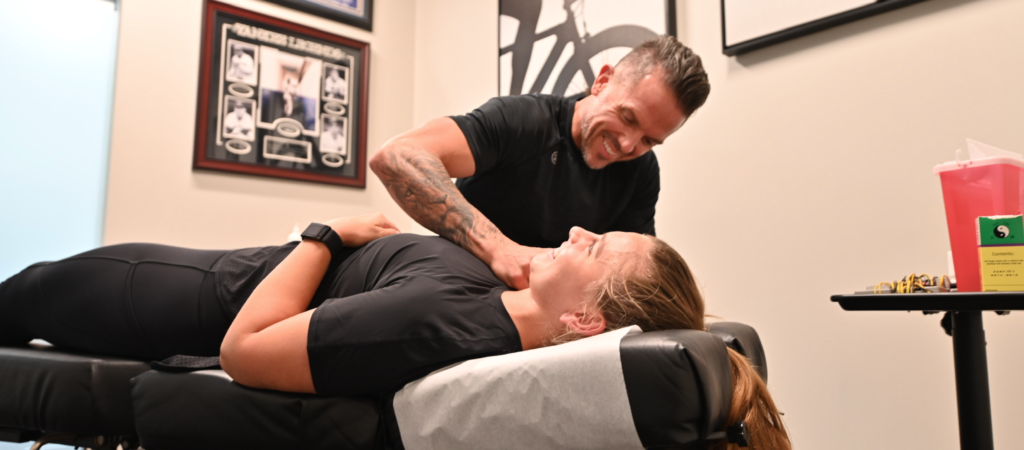
Neck pain is one of the most common complaints we see in working professionals across Plano, Frisco, and North Dallas.
It affects executives, clinicians, engineers, accountants, and anyone whose day is dominated by screens, meetings, and long stretches of focused work.
Most people assume the cause is simple. Bad posture. Poor ergonomics. A weak neck.
That explanation sounds logical. It is also incomplete.
Why Desk Work Triggers Neck Pain So Reliably
The neck was not designed for stillness.
The issue is not that you sit. The issue is that you sit for too long without variability. Prolonged static positions, even “good posture,” load the same tissues repeatedly.
Over time, this leads to:
- Muscle fatigue and guarding
- Reduced blood flow to postural muscles
- Increased sensitivity in the nervous system
- Loss of strength and endurance in the upper back and neck
The neck begins to protest not because it is damaged, but because it is overloaded without recovery.
The Posture Myth (And Why It Persists)
Posture gets blamed because it is visible and easy to point at.
In reality:
- There is no single perfect posture
- People with “poor posture” are often pain free
- People with “great posture” still develop neck pain
The real problem is not alignment. It is capacity.
If the neck and upper back lack endurance, even good posture becomes fatiguing. If stress levels are high, the nervous system stays on guard, amplifying discomfort.
Chasing posture without addressing strength, movement, and stress almost always fails.
How Stress and Focus Play a Role
Desk work is not just physical. It is cognitive.
High concentration, deadlines, and responsibility increase baseline muscle tension. Many professionals unconsciously hold their breath or breathe shallowly throughout the day.
This matters.
Shallow breathing increases neck and shoulder muscle activity. Over time, those muscles never truly relax. Pain becomes persistent, not because of injury, but because the system never downshifts.
Common Neck Pain Patterns We See
Neck pain from desk work often presents as:
- Stiffness at the base of the skull
- Aching between the shoulder blades
- Headaches that start in the neck
- Sharp pain when turning the head
- Symptoms that worsen late in the day
Imaging is rarely necessary early on. Most of these patterns are functional, not structural.
Why Stretching Alone Is Not Enough
Stretching feels good, and short-term relief matters. But stretching alone does not solve the problem.
Without strength and endurance:
- Muscles fatigue quickly
- Tension returns
- Symptoms cycle endlessly
Stretching calms symptoms. Strength changes outcomes.
What Actually Fixes Desk-Related Neck Pain
Long-term relief comes from improving how the neck, upper back, and nervous system work together.
Effective treatment typically includes:
- Strengthening the deep neck and upper back muscles
- Improving thoracic spine mobility
- Breathing retraining to reduce unnecessary tension
- Gradual exposure to sustained positions
- Education that reduces fear and hypervigilance
- Simple movement strategies during the workday
This approach restores tolerance rather than chasing symptoms.
Why Movement Breaks Matter More Than Ergonomics
An ergonomic setup is helpful, but it is not protective on its own.
Regular movement breaks:
- Restore blood flow
- Reduce muscle fatigue
- Reset the nervous system
- Improve concentration and productivity
Five minutes of movement every hour often does more than the most expensive chair.
How We Evaluate Neck Pain Differently
A meaningful evaluation looks beyond where it hurts.
We assess:
- Neck and upper back strength and endurance
- Breathing patterns under stress
- Shoulder blade control
- Workday demands and posture variability
- Sleep quality and recovery
- Prior injury history
- Fear around movement
This allows us to address the root contributors, not just the tight spots.
When You Should Get Help
Neck pain deserves attention when:
- It persists longer than two weeks
- Headaches become frequent
- Pain limits work focus or sleep
- Symptoms are worsening, not stabilizing
- You feel unsure how to move safely
Early guidance prevents chronic tension patterns that can last for years.
A Final Thought
Your neck is not fragile. It is underprepared.
When capacity improves, pain fades into the background. Focus improves. Work becomes less draining. Movement feels safe again.
If you live in Plano, Frisco, North Dallas, or nearby and want clarity instead of trial and error, the right assessment changes everything.