
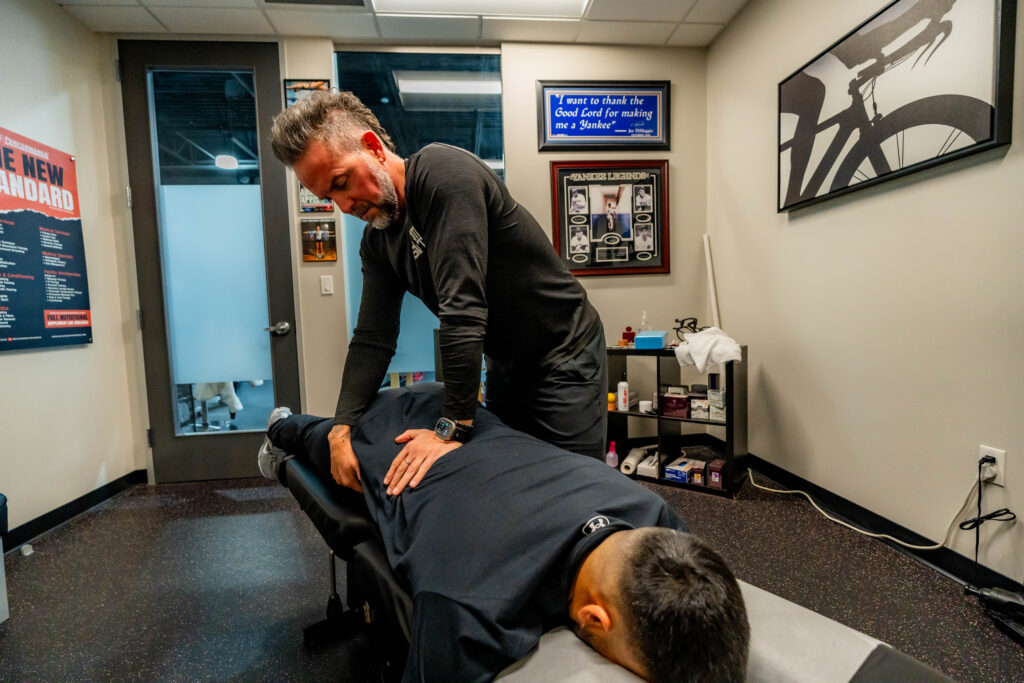
To reduce back discomfort during holiday travel, change positions regularly, take walking breaks when safe and pack luggage you can handle comfortably. Managing travel back pain is especially important for frequent travelers. If back pain keeps returning or limits normal activities, a physical therapy evaluation can help you understand your symptoms and build a plan around your trip.
Thanksgiving road trips and December flights can mean hours in a seat followed by carrying bags, sleeping somewhere unfamiliar and trying to keep up with family plans. If you are already wondering how your back will handle the trip, this is a good time to make a plan.
At Performance Medicine & Sports Therapy in Plano, we help people work toward the activities that matter to them. That includes getting through a flight, driving to see family and enjoying the visit once you arrive.
Why does my back hurt when I travel
Travel combines prolonged sitting with lifting and carrying. Heavy luggage can strain the back, neck and shoulders. Back pain also has many possible causes, so a flare during travel does not identify the problem on its own. Notice when symptoms start, which positions bother you and what helps them settle.
A long drive may reveal that sitting is uncomfortable. Carrying a suitcase may expose a lifting task you have been avoiding. Those details give your clinician something specific to assess. The American Physical Therapy Association explains how PT evaluates pain, including symptom patterns, movement and the effect on daily life.
For more background, read our guide to low back pain and disc injuries.
How can I manage back pain on a long car ride
Plan opportunities to get out and move before you leave. Choose safe stopping places along the route so movement breaks are part of the trip. If symptoms begin building, use the next safe opportunity to stop.
Adjust the seat while parked so you can reach the pedals and steering wheel comfortably. A small back support may be worth trying if it feels helpful. Keep your seat belt properly positioned and your view clear. Make adjustments only when safely stopped.
At a stop, take a short, comfortable walk. For many people with back pain, staying active is preferable to prolonged bed rest. The NHS back pain guidance supports continuing normal activities as tolerated. Stop an exercise that makes your pain worse and get advice.
What should I do about back or neck pain on a flight
Use opportunities to walk when the crew permits and it is safe. Keep frequently used items easy to reach so you do not need to repeatedly pull a heavy bag from the overhead bin. If you already have a treatment plan, ask your therapist which parts are practical in an airport or airplane seat.
Neck symptoms deserve the same individual attention. Tell your clinician if turning your head, looking down or sleeping in a seat aggravates them. Gentle movements and changes to aggravating activities may help, but the right approach depends on your examination. The APTA guide to neck pain describes how treatment can address motion, strength and everyday activity.
Movement also matters for circulation. The CDC recommends frequent leg movement during long trips. If you have a history of blood clots, recent surgery or other clot risk factors, ask your medical clinician about travel precautions before leaving.
How can I lift luggage without aggravating my back
Pack for what you can comfortably manage. Wheeled luggage can reduce how much you carry and splitting belongings into manageable bags can make handling them easier.
When lifting, move close to the bag, bend your knees and keep the load near your body. Turn with your feet instead of twisting while holding the suitcase. Get help with a heavy or awkward bag, especially when lifting overhead. These practical steps follow AAOS guidance on lifting and carrying luggage.
If you cannot comfortably lift your packed bag at home, change the packing plan before you reach the airport. A lighter bag or checked suitcase may be the more workable choice.
When should I book physical therapy before a trip
Consider an evaluation when pain is affecting daily activities, keeps returning or has not improved with reasonable self care. You can also ask for guidance when you are unsure how to manage a known problem while away.
Bring the details of your trip. How long is the drive or flight? Will you be carrying bags upstairs? How much walking are you expecting? Those answers help connect your treatment goals to the demands ahead.
Our physical therapy team in Plano uses an individualized evaluation to guide care. Depending on your needs, a plan may include exercise, movement practice, manual therapy and a home program. Your clinician can also determine whether another medical evaluation is appropriate. Progress and the number of visits vary by person.
Common questions about holiday travel and back pain
Should I stretch before a long drive
Gentle movement may help you feel more comfortable, but the best exercises depend on your symptoms. If you already have a home program, ask your therapist how to adapt it for travel. Avoid forcing stretches that make symptoms worse.
Does pain down my leg mean I have sciatica
Radiating leg pain can occur with sciatica, but a symptom description alone does not establish the cause. A clinician should assess new or worsening symptoms, especially when numbness or weakness is present.
Can physical therapy help even if I leave soon
An evaluation can help clarify your next steps and provide advice for the trip. How much your symptoms change before departure depends on the condition and time available. No visit can guarantee a pain free trip.
Where can I schedule physical therapy near Plano and Frisco
PMST is located at 6101 Windhaven Parkway, Suite 145, Plano, TX 75093. Our Plano facility serves patients from nearby communities including Frisco, The Colony and North Dallas. Visit our physical therapy page to book online or call or text 972-473-8980 for help finding an appointment.
When travel pain needs urgent medical attention
Seek emergency care for back pain with new bowel or bladder changes, numbness around the groin or significant weakness in both legs. Severe symptoms after a serious accident also need emergency evaluation. Fever with back pain or rapidly worsening pain needs prompt medical assessment.
After travel, new unexplained swelling or pain in one leg needs prompt medical attention. Sudden shortness of breath or chest pain requires emergency care. These symptoms should not wait for a routine PT appointment.
Make a plan before the holiday trip
If back or neck pain is already changing your travel plans, let us help you figure out the next step. We can discuss your goals, evaluate your movement and build a plan that fits the activities you want to get back to.
Schedule your physical therapy appointment online at recoverwithpurpose.com. For questions about availability or your first visit, contact our team or call or text 972-473-8980.
Physical therapy services at PMST are provided as a department of Crescent Regional Hospital. Hospital outpatient billing may apply. Our team can help you understand benefits and estimated costs before care.